Revit Electrical — BIM Plugin
Schneider Electric × Autodesk® — BIM plugin for Electricity 4.0.
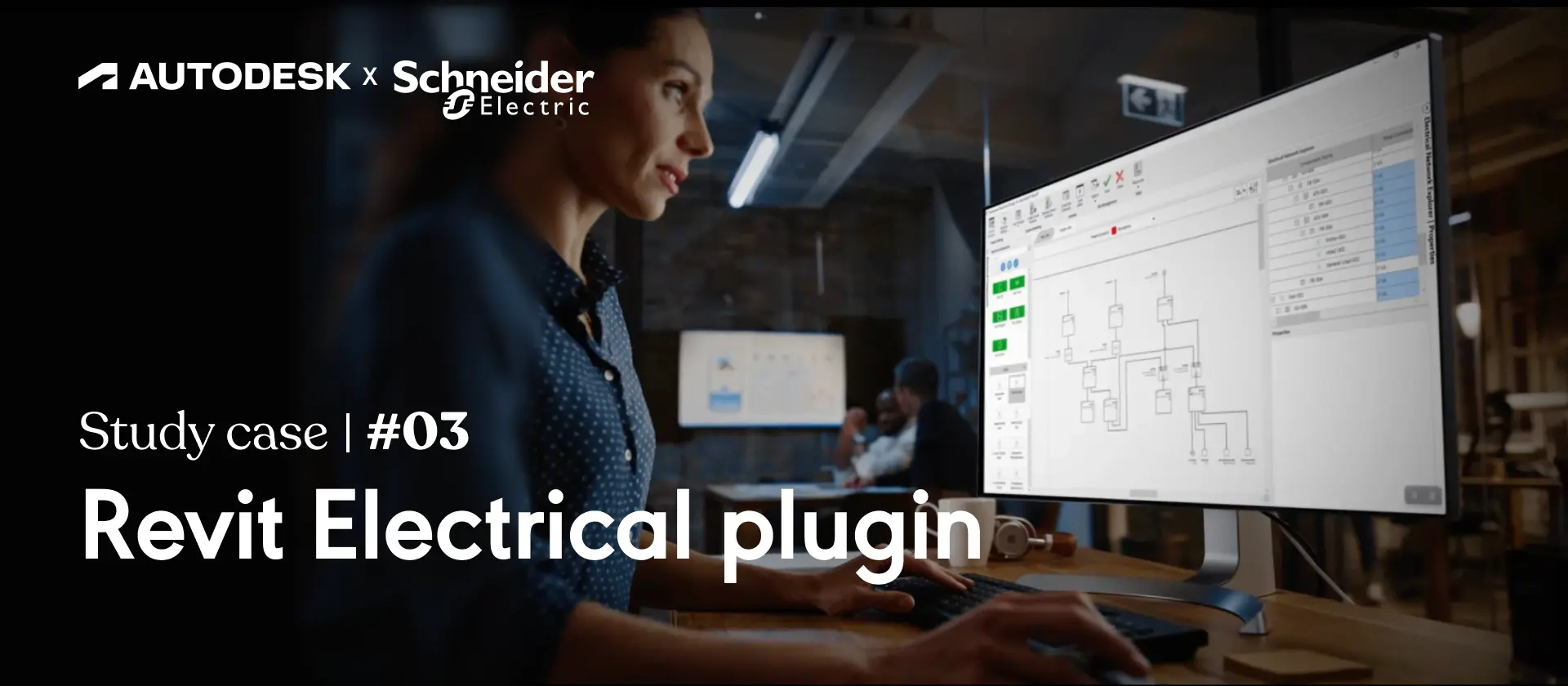
Electricity 4.0, built into Revit
Schneider Electric launched a strategic partnership with Autodesk to offer electrical engineers the best-in-class digital tool to design electrical networks.
The ambition: enable electrical engineers to play a leading role in designing high performance buildings for Electricity 4.0, in the new energy landscape.
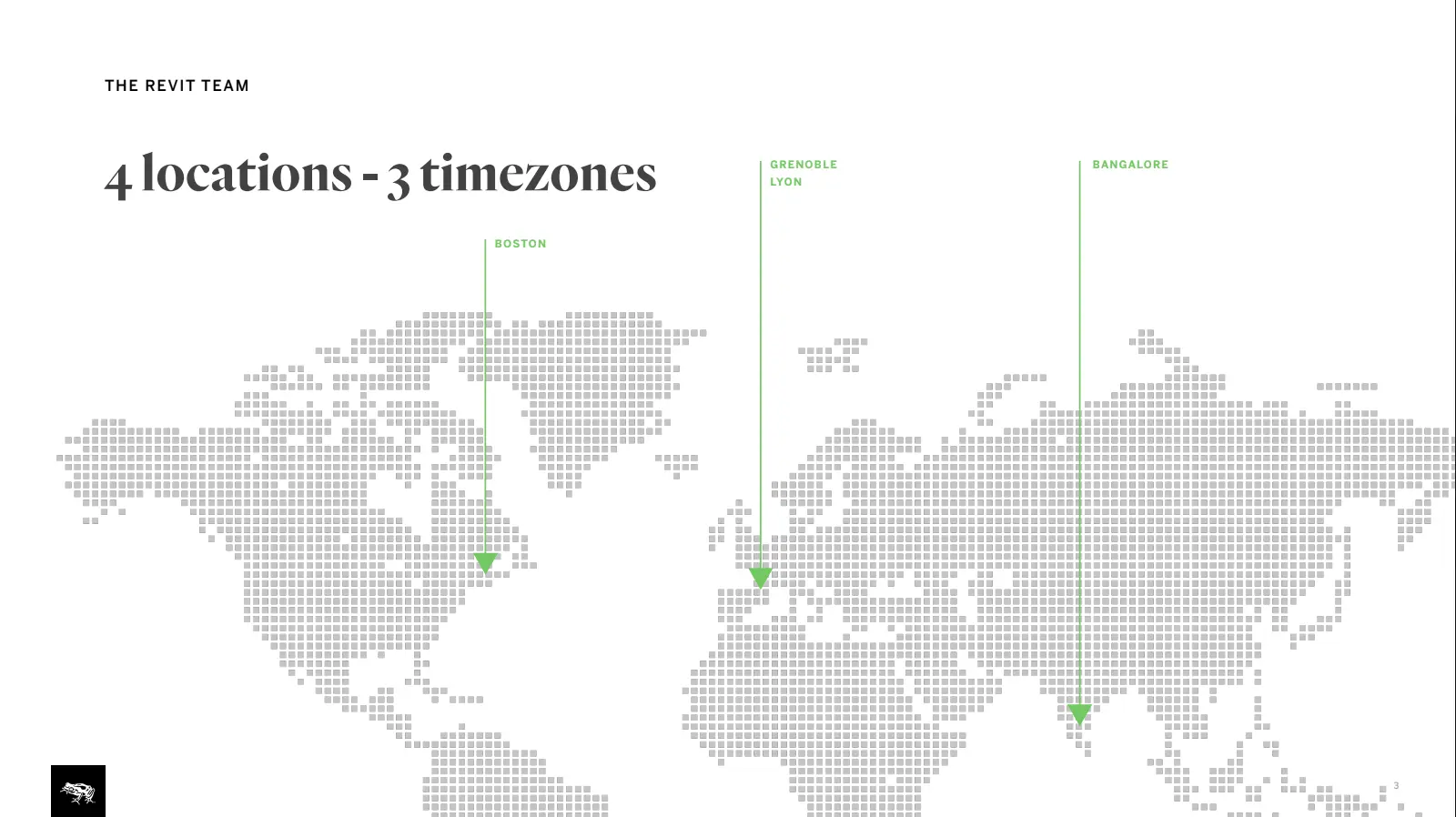
Cross-functional, cross-timezone
A cross-functional team across 4 locations and 3 timezones:
Lyon, Grenoble, Boston, Bangalore.
Two companies, one product
This project brought together two major industrial players, Schneider Electric and Autodesk, each with their own roadmap, engineering culture, and definition of success.
A core part of the mission was defining the MVP of the plugin, an Autodesk Revit integration powered by Schneider Electric's product data and electrical expertise. That meant navigating competing priorities between both organisations, translating technical constraints into design decisions, and keeping the product focused on what would deliver real value to electrical engineers on day one.
Four phases to ship an MVP
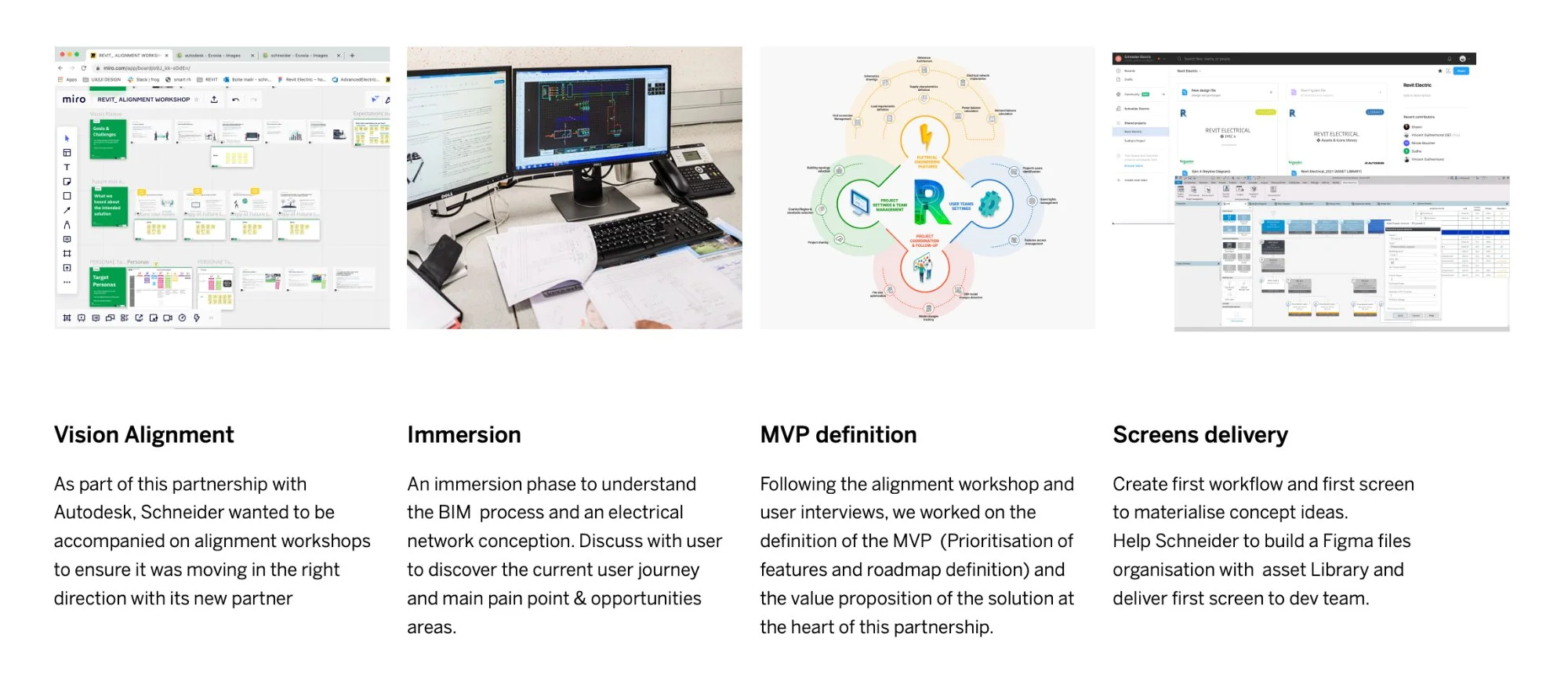
Vision Alignment
Alignment workshops between Schneider and Autodesk to list specific goals, define common challenges, identify target users and prioritise markets.
Immersion
Deep-dive into the BIM process and electrical network conception. User interviews to discover the current journey, main pain points and opportunity areas.
MVP Definition
Feature prioritisation and roadmap definition. Value proposition of the solution at the heart of the partnership.
Screens Delivery
First workflows and screens to materialise concept ideas. Figma file organisation with asset library — deliver first screens to dev team.
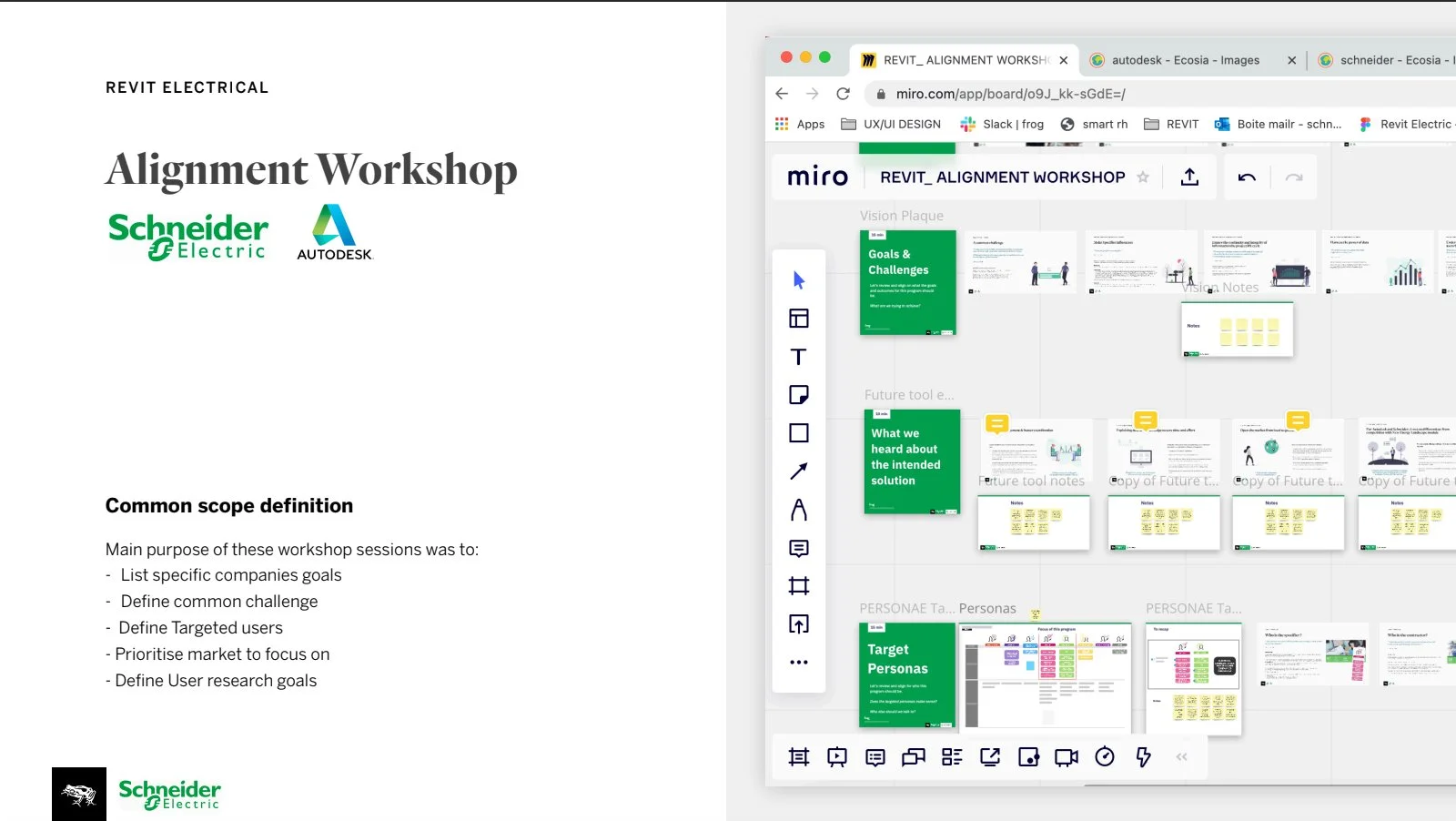
Getting two companies to agree
The alignment workshops brought both companies together to list specific goals, define common challenges, identify target users, prioritise markets, and set user research goals. Sessions were run on Miro, with both Schneider Electric and Autodesk teams participating remotely across timezones.
Into the world of electrical engineers
Discovery was split into three steps:
We conducted 8 interviews in the US and 5 in the UK, covering electrical department managers and engineers working with Revit, AutoCAD MEP, BIM 360 and other tools.
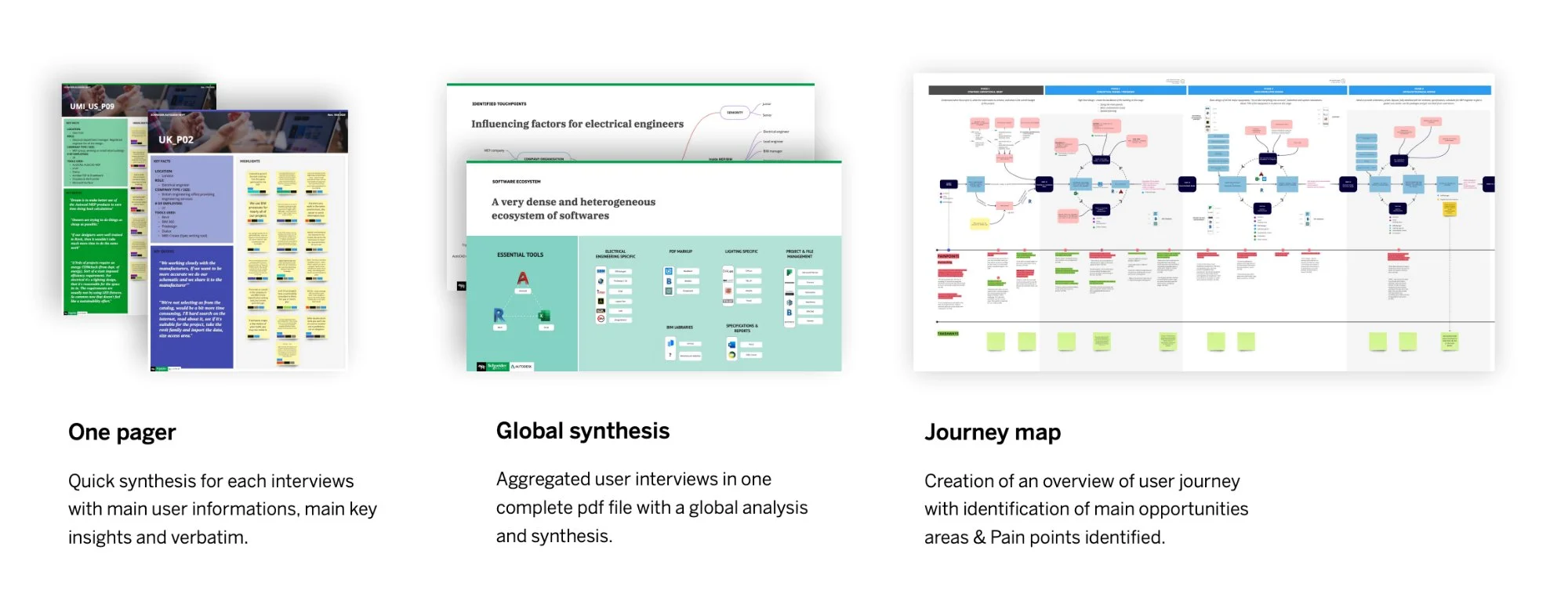
Each interview was summarized in a one-pager, and an overall synthesis was shared before creating a detailed user flow.
Key insight: The software ecosystem for electrical engineers is extremely dense and heterogeneous with no unified workflow.
From research to product scope
Following alignment workshops and user interviews, we defined the value proposition and MVP scope.
The plugin was structured around five functional pillars:
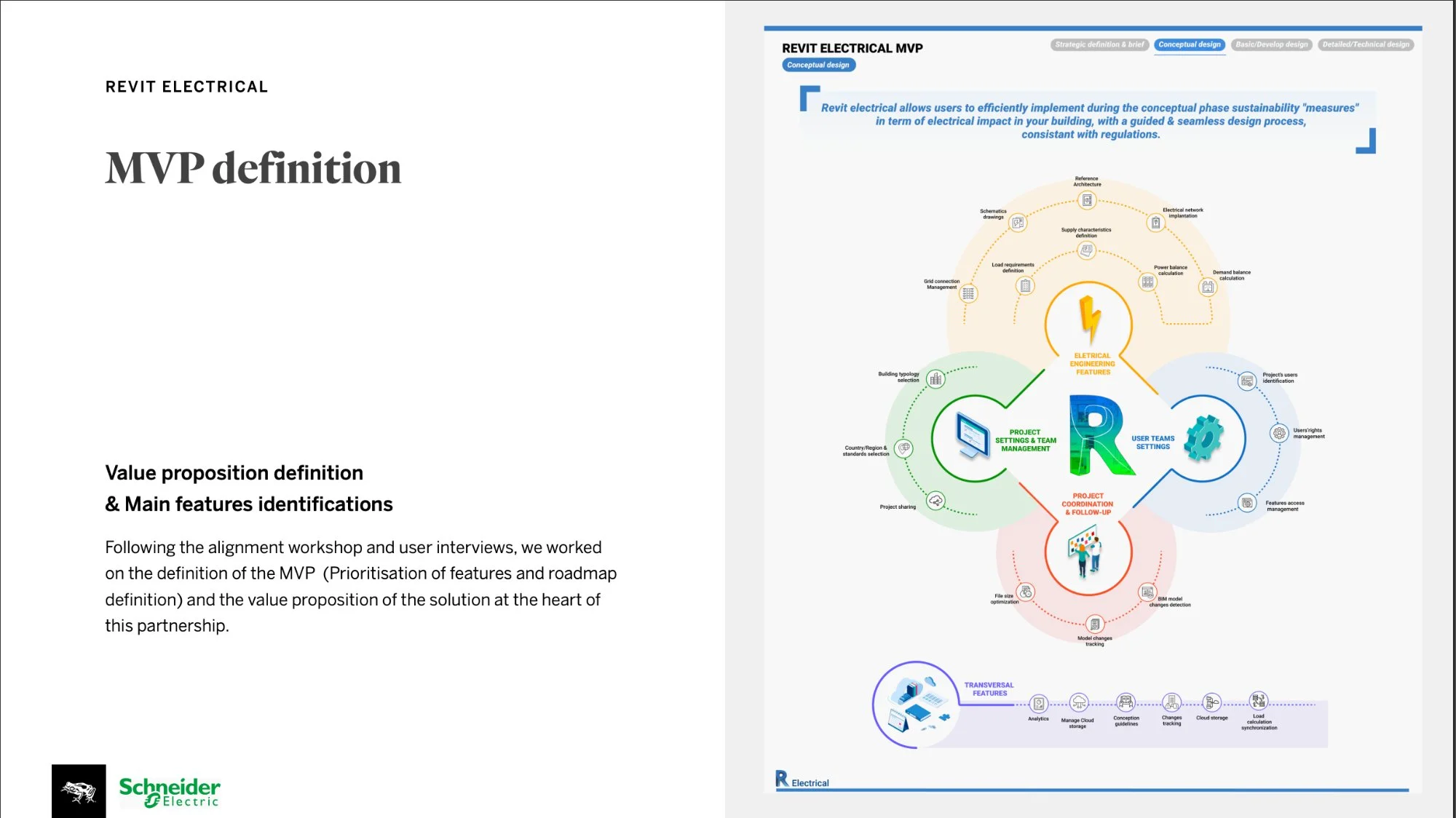
MVP feature map — value proposition & feature prioritisation for the Revit Electrical plugin
Translating research into a user flow
Based on the interviews, field observations and the MVP scope, we designed the core workflow of the product.
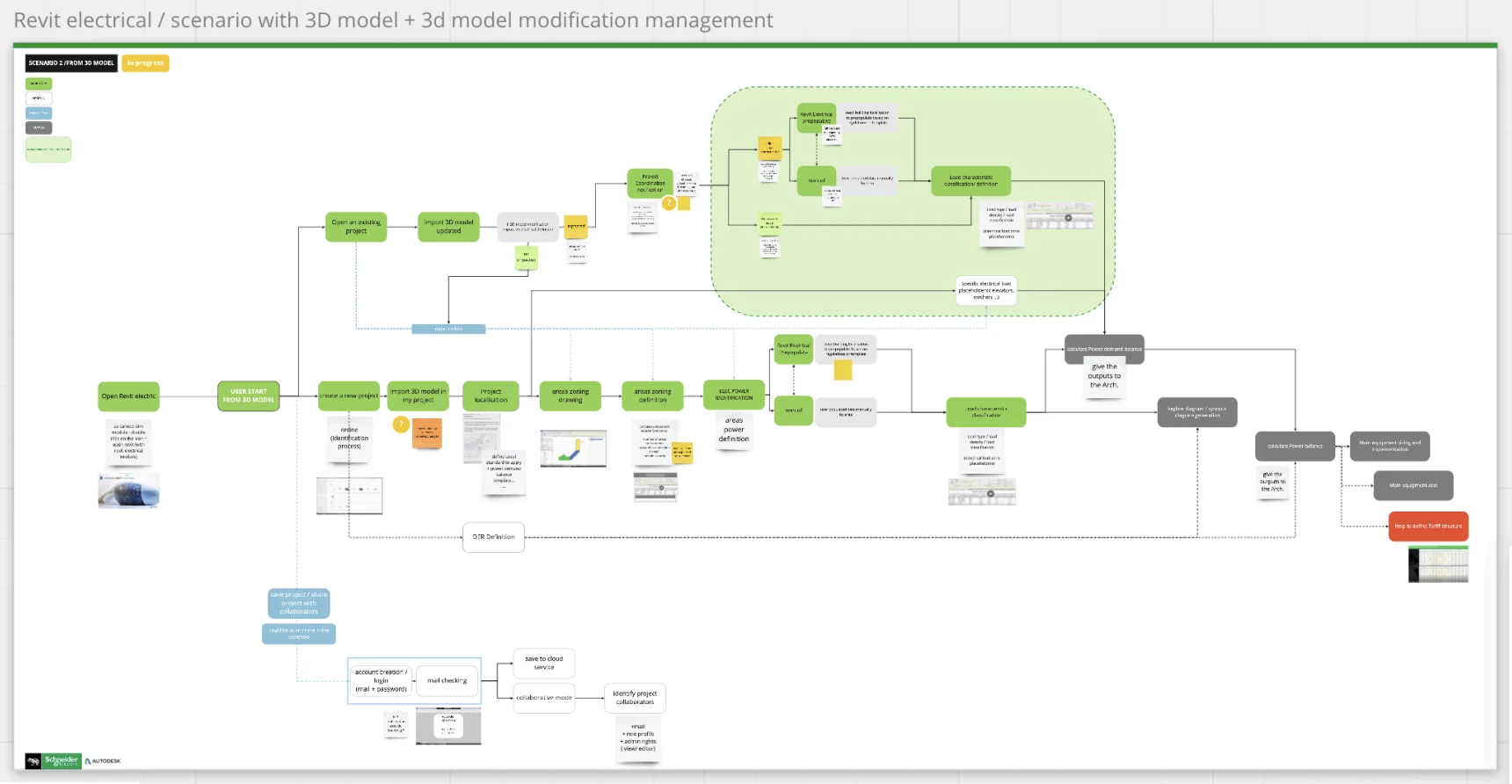
The goal was to translate research insights into a clear and efficient user flow for the first version of the plugin.
This workflow helped align the team on how electrical engineers would interact with the tool inside Revit and how the different features would support their daily tasks.
Sprint-based design delivery
I helped structure the Figma file organisation: an asset library, epic files (one page per feature with definitions + behaviors), and a prototype file enabling dev teams to quickly find content for their sprints.
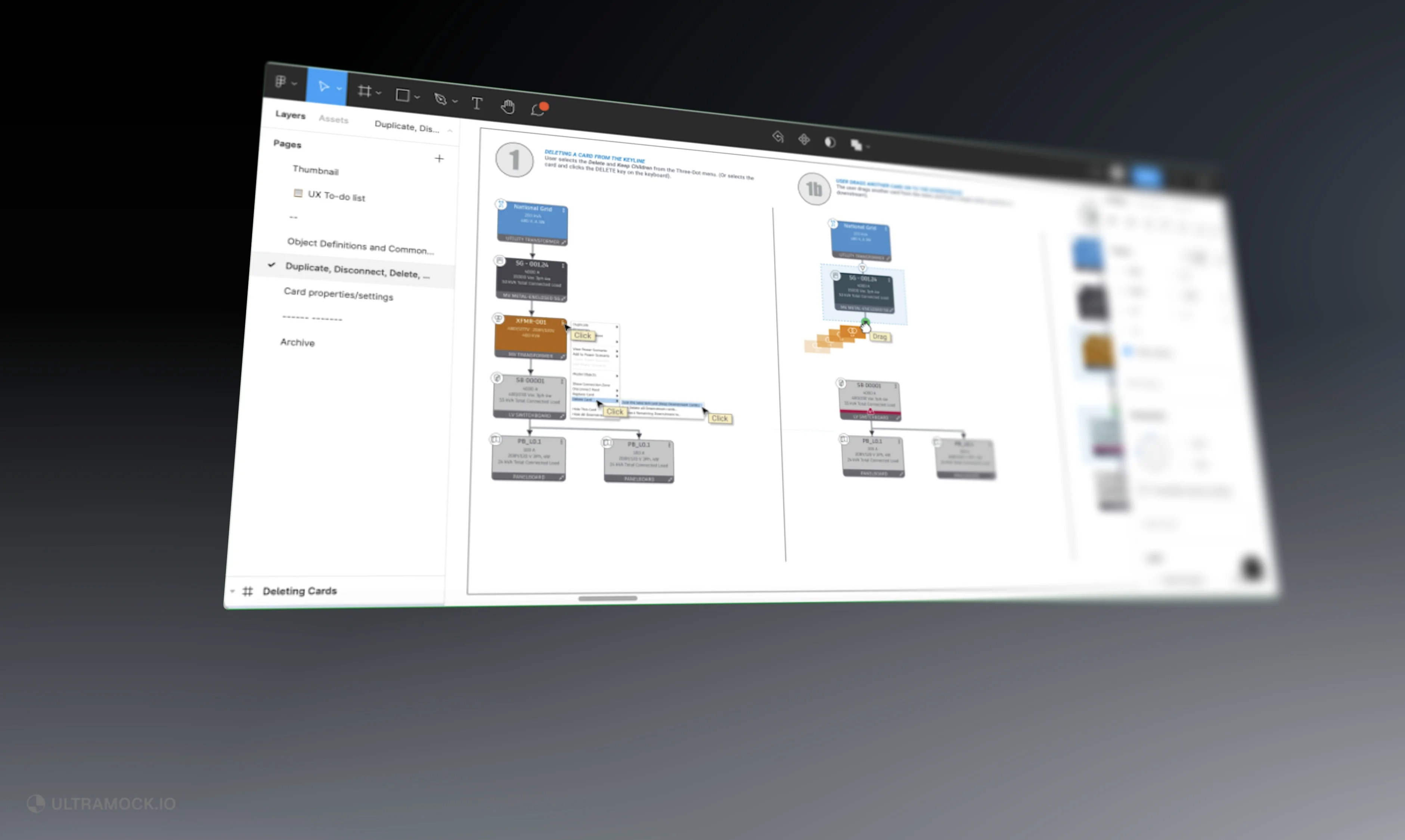
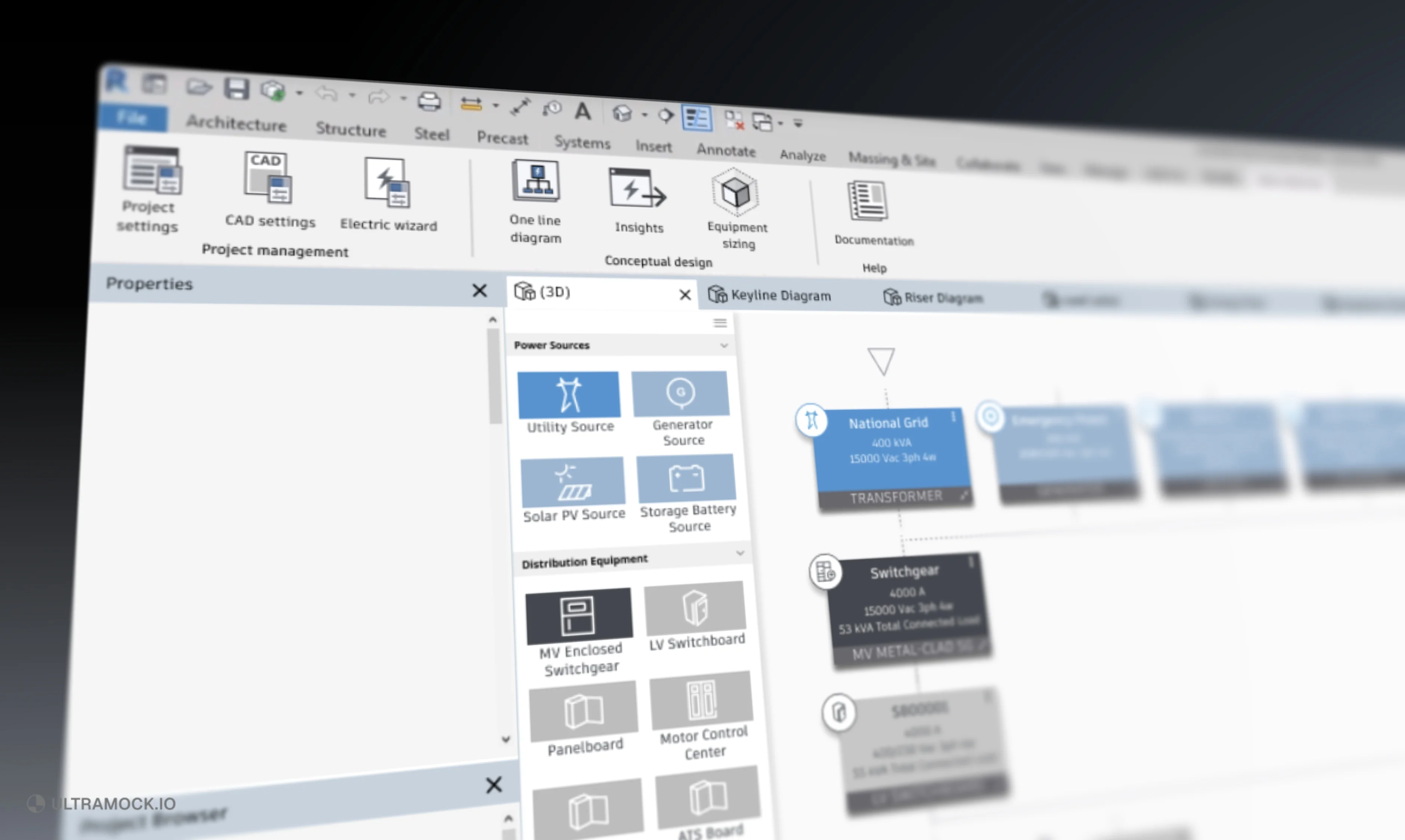
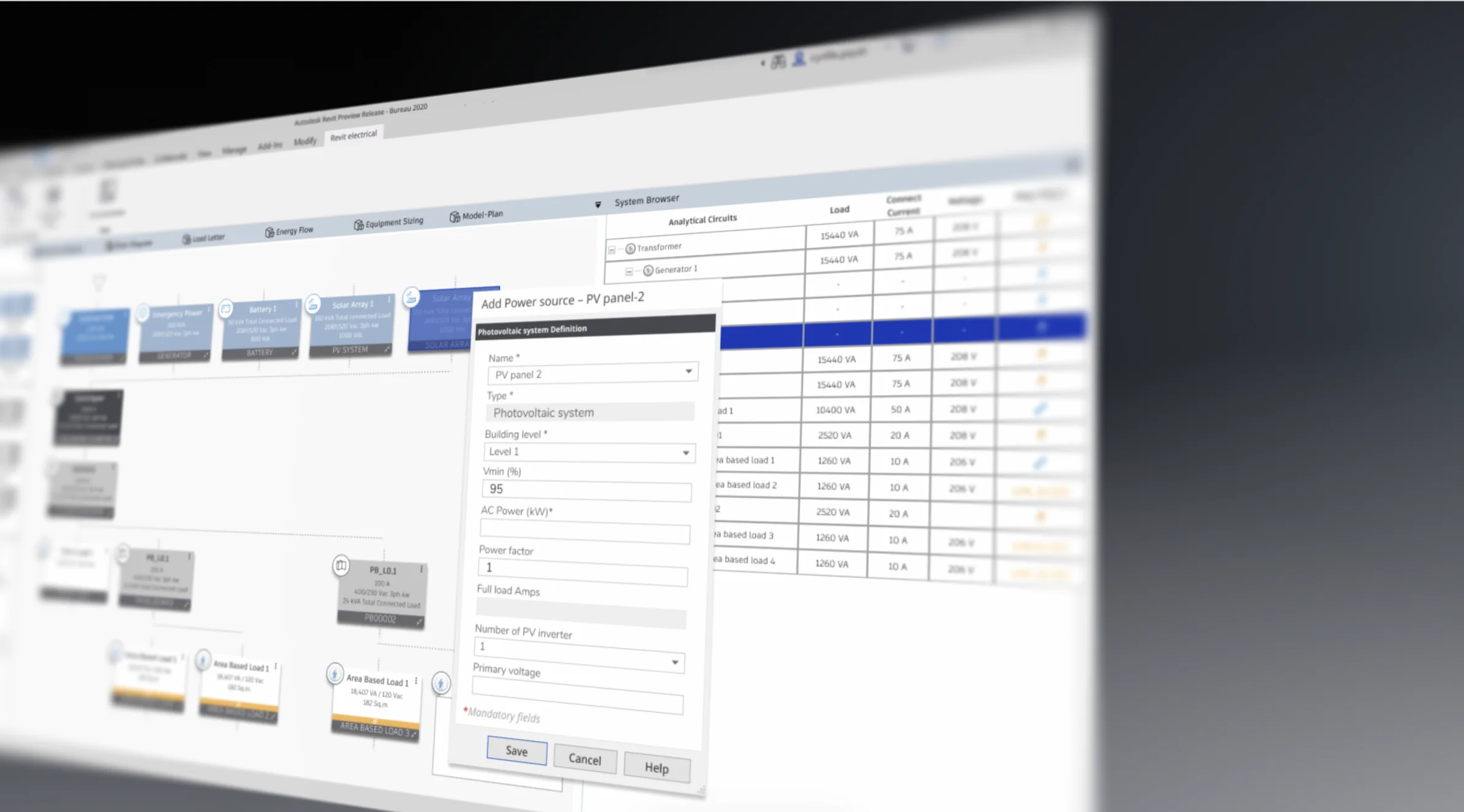
The MVP was successfully delivered despite the limitations imposed by Autodesk's restrictive design system.
From alignment to shipped product
A complex multi-stakeholder project delivered on time, from zero to a working MVP used by electrical engineers in the field.
"Our alliance leverages Schneider Electric's global engineering and sustainability expertise to offer Advanced Electrical Design for Autodesk Revit, enabling electrical engineers to play a leading role in designing high performance buildings for Electricity 4.0 in the new energy landscape."
Daniel Stonecipher
VP, Chief Product Officer eCAD · Schneider Electric
What I took away
Clear team structuration is mandatory to be efficient
Working across 4 locations and 3 timezones with two large companies requires explicit ownership, rituals, and communication protocols from day one.
Involve the technical team early
Autodesk's Design system & software constraints. Understanding those constraints before wireframing saved significant rework later in the process.
Don't be too rigid, but be bold in your decisions
In a multi-stakeholder partnership, strong design leadership mattered. Taking clear positions on scope and UX decisions helped drive better outcomes than endless alignment.